

Lot n° 33
Estimation :
40000 - 60000
EUR
Register for the sale on drouot.com
Leave absentee bid
Your amount
EUR
Bid by phone
Bid by phone
Your amount
EUR
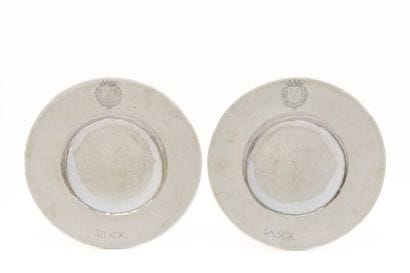
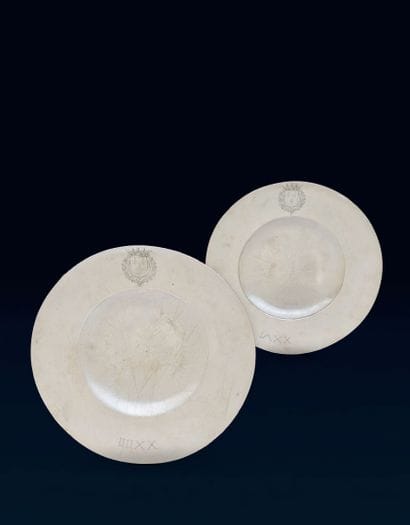
IMPORTANT PAIR OF ROUND SILVER PLATES, with a hollowed-out c - Lot 33
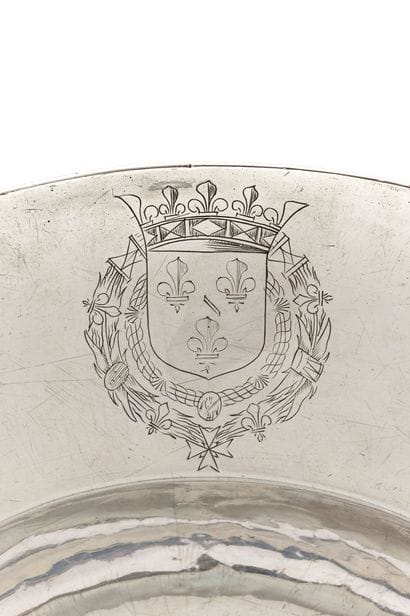
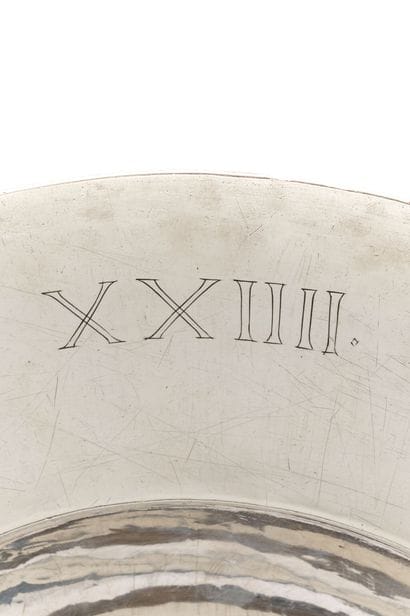
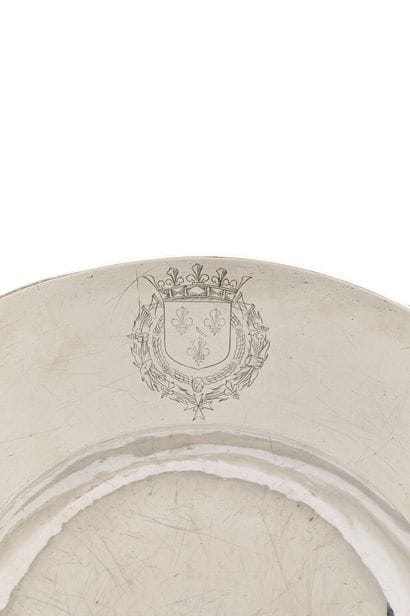
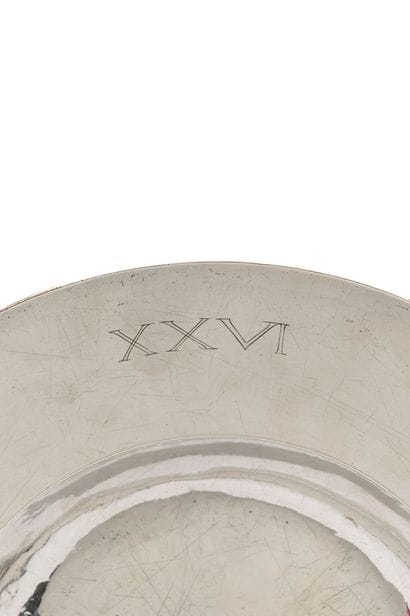
IMPORTANT PAIR OF ROUND SILVER PLATES, with a hollowed-out center and a rimmed edge; the wide rim is engraved with the coat of arms of Henri II de Bourbon-Condé, adorned with the collars of the royal orders of Saint Michael and the Holy Spirit, as well as the numbers “XXIIII” and “XXVI,” guild member and master silversmith, (scratches and slight signs of wear),
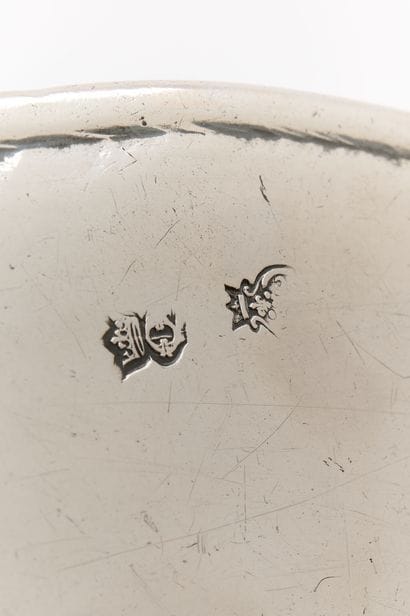
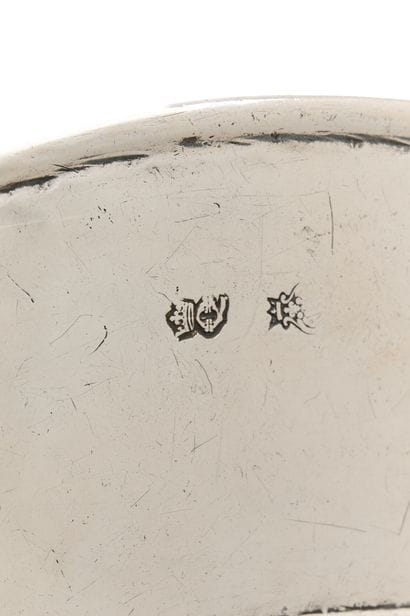
Master silversmith’s hallmark: “crowned fleur-de-lis,” two dots, the center illegible, surrounded by three crescent
moons, within a cartouche,”
Paris, 1636–1637,
Diameter approx.: 32.9 cm; Weight of both plates: 1,858 g.
Accompanied by an analysis from the Waarborg Holland laboratory.
Comparison: See the Fraysse auction of December 10, 2015, where another pair of plain round dishes, of the so-called “cardinal” shape, bearing the same hallmarks and the same engraved coat of arms, numbered XXXIX and XLIII, sold for 98,000 € (estimate: 60,000–80,000 €).
Catalog Note
These plates are engraved with the coat of arms of Henri II de Bourbon-Condé. Henri II de Bourbon-Condé, born in 1588 in Saint-Jean-d’Angély, was the posthumous son of Henri I de Bourbon-Condé. Recognized as a potential heir to the French throne until the birth of Louis XIII in 1601, he married Charlotte-Marguerite de Montmorency in 1609, with whom he had three children, including the famous Grand Condé.
An opponent of Marie de Médicis’s government, he was imprisoned for several years at Vincennes. He also held several important offices, notably that of viceroy of New France.
He died in Paris in 1646, leaving behind a considerable fortune and descendants who would ensure the continued influence of the House of Bourbon-Condé.
Tradition credits Cardinal Mazarin with introducing the deep plate known as the “mazarine” to France around 1650, which he is said to have brought back from Italy. This claim requires some qualification: forms of deep plates—serving dishes with raised rims—were already in use in European courts as early as the beginning of the 16th century. It was nevertheless during the 17th century that the deep plate truly established itself as a distinct piece of tableware, becoming more widely used; Mazarin is credited above all with popularizing this form, which would retain his name.
These pieces are also made all the more rare by the melting-downs ordered by Louis XIV, who had a large portion of the kingdom’s silverware converted into cash to finance his wars. The dishes presented here are among the rare examples from this period that escaped being melted down, and their appearance on the market remains exceptional. Those offered for sale at Fraysse suggest the existence of a larger set, characteristic of 17th-century tables.
My orders
Sale information
Sales conditions
Return to catalogue